

Why We Needed The Covid Inquiry To Come Down Hard on Ministers
It's more than just the next pandemic or the pursuit of justice; it's about demanding a higher calibre of politician.

Perhaps one of the most defining characteristics of many of those seeking political office is their desire for power. They want the life. Subordinates flocking around them, bowing to their every need and command; the rich and famous swooning over them; dining out; travelling, and ultimately having a say over the lives of others. They want the life and lifestyle of someone important.
They want the power but don’t want to face the responsibilities that come with it.
Case in point is the initial phase of the Covid pandemic.
Here, in the U.K., we had Ministers with little to no experience of science, logistics, planning, or really anything that could be of practical use, leading the pandemic response. Typically, the ministers were from wealthy backgrounds. They had no practical experience of life, at least life as it was for the majority of us.
There they were, living it large on the public purse, bathing in the prestige and privilege that comes with high public office, when news started emerging of a deadly pathogen spreading around the globe.
No doubt, it is the stuff that movies are made from. Indeed, Matt Hancock, our Health Secretary at the time, stated quite openly that he got a lot of his understanding and ideas from the film Contagion, if you can believe that.
And this was how it was in the U.K. We had inexperienced, immature, and maligned politicians charged with decisions that would literally, and quite immediately, cost or save lives.
Sadly, the good politicians didn’t outweigh the bad
Some politicians were clearly weighed down with this sense of responsibility. Notably, the first ministers of Scotland and Wales seemed to take the responsibility heavily on their shoulders. At each press conference, you could see the anguish in their eyes as they battled no-win decisions and an unhappy, terrified public.
The U.K. government seemed unburdened by such weight. Indeed, at times, they seemed near jubilant. Not excited in the way first responders can get with the prospect of using their training to respond to a major incident. A far creepier and sinister kind of excitement.
The U.K.’s £160m Covid Inquiry
The Covid Inquiry in the UK has reached an important milestone. They have recently produced a 760-page report about government decision-making during the pandemic.
There are a few headline-grabbing comments made: “toxic culture”, “too little, too late”, and a reference made to the fact that the delays in acting meant lockdowns were inevitable. And while the identification of these core failures is useful, the language and assignment of blame are woefully inadequate.
For example, when discussing the delays in the initial lockdown:
“might have been shorter or not necessary at all,”
Where does the “might” come from? Wasn’t the point of the £160,000,000 Covid Inquiry to remove the doubts and give us clear lines of accountability, so that such an epic disaster doesn’t happen again?
There is no doubt that starting the U.K.’s national restrictions earlier would have saved lives, shortened the actual lockdowns, and reduced the negative impact on the economy. There is no doubt about this. So why the watered-down, equivocal statements?
Perhaps more damning of the Covid Inquiry’s ability to have any effect on the behaviour of politicians is their attempt to spread the blame around.
They state that all four nations were slow to implement national lockdowns at the start, despite Wales, Northern Ireland, and Scotland not having the powers to order lockdowns or any national restrictions until the Coronavirus Act was passed on 23rd March 2020. The only person in the entire U.K. who could order such measures in time was the U.K. Prime Minister, Boris Johnson.
Maybe the Inquiry is trying to avoid implicating the PM in more serious offences. If indeed the PM was pursuing a herd immunity policy based on some neo-liberal wet-dream, despite the overwhelming evidence and advice to the contrary, then allegations of corporate manslaughter, or at least Misconduct in Public Office, would seem fitting. But that’s not their role, is it?
It raises the very real possibility that the Covid Inquiry is a way to circumvent justice. What if there were no Inquiry ongoing? Would we each take our grievances to the courts? Would Ministers face legal prosecution versus a slightly embarrassing witness statement?
I don’t want justice, I want accountability
Now, it may seem like I am seeking justice for the thousands of lives lost and the damage caused by the prolonged and protracted lockdowns, and maybe to some degree I am, but the bigger point, and why the Covid Inquiry is woefully failing in its duties, is that assigning responsibility to the appropriate minister or government official is essential in maintaining the integrity of public office.
We must know who specifically was at fault. We must say clearly, ‘this was your decision and you got it wrong, and because of that, thousands of people died’. We may not achieve actual punitive justice in such matters, but, at the very least, those responsible should feel the gravity of what they have done. Public office should not be all privilege and no burden. Becoming a Minister should not be an opportunity to merely expand your interests. It must be a responsibility to discharge your duties for the benefit of the people first; it must carry a weight of ‘public interest’ with it.
Not just negligence but misconduct
It is more complicated in the U.K. because we have had some serious failures and misconduct by our Members of Parliament.
The Coronavirus Act allowed the government to print money to respond to the crisis. We then witnessed a swarm of Lords and MPs trying desperately to extract such funds in whatever way possible.
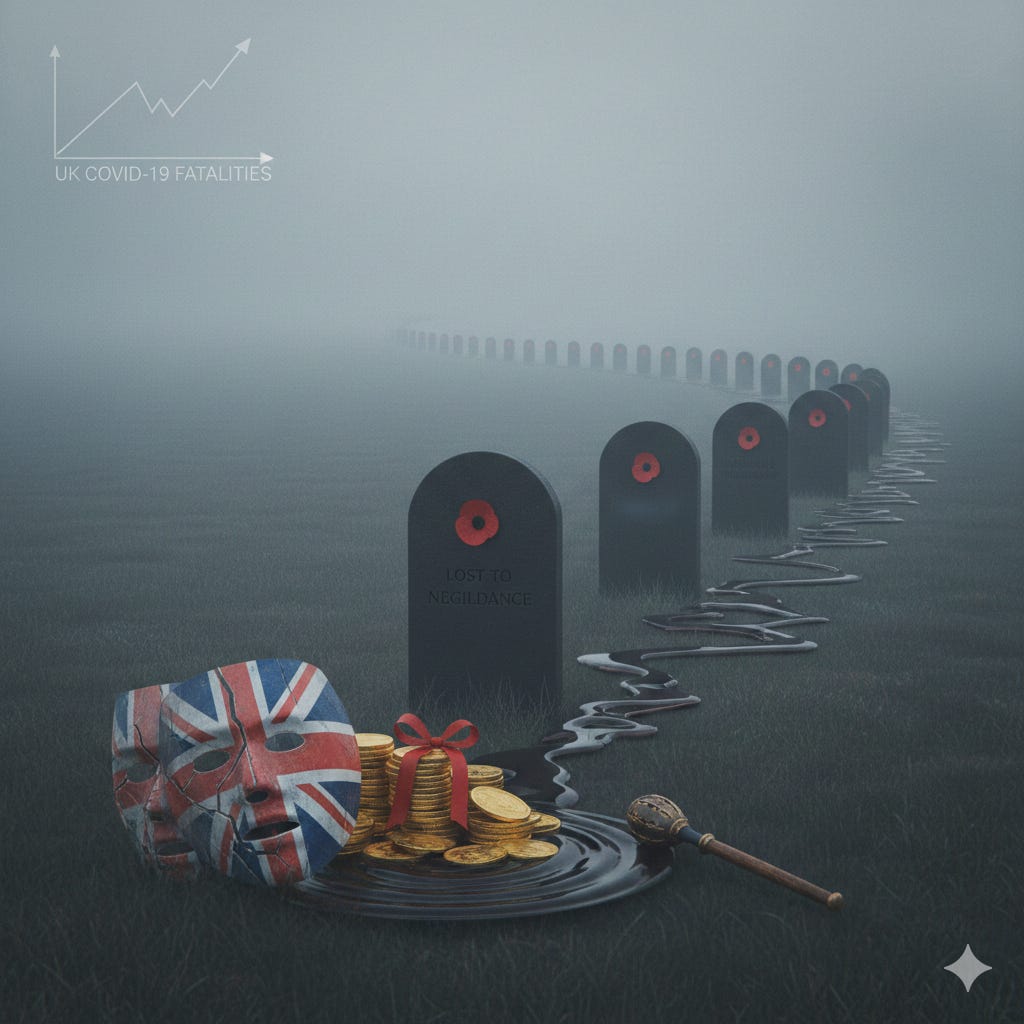
Friends, family, neighbours, and even MPs themselves were all involved in dodgy PPE deals, testing deals, and who knows what else. This was the equivalent of war-profiteering. And what is to stop them from doing it again? Absolutely nothing.
If the exact same situation repeated itself, with the same type of Ministers in charge, almost certainly the same conduct would follow. They would still suck up as much Covid funding as they could, even if that meant taking resources away from the frontline where it could have saved lives and eased suffering. They would still try to express their political ideology regardless of what the facts on the ground were or what the expert advice was. And god help you if, like it was with Trump in the U.S. and Bassano in Brazil, that political ideology is neo-liberal - you will be left to fend for yourself as the wealthy, protected in their subsided bubbles, seek to extract even more money from you.
Perhaps after the Covid inquiry, we will be a bit more prepared. Certainly, those of us on the frontline will be more inclined to take action and not wait for bureaucratic advice. But, ultimately, we will still be in the situation whereby we, the public, will have to roll the dice during the next pandemic; whereby the calibre, integrity, and experience of those Ministers who happen to be in post at the time will dictate our fate. We will still be entirely vulnerable to maligned politicians being in a position to extract the resources meant for life-saving treatments. We are still in a position where public office is seen as a cushy job with stacks of privilege and access, and with none of the downsides.
Johnson utterly failed the people of the U.K. Those around him failed too. Johnson failed because of his misinformed, half-arsed, neo-liberal take on life. This has to be called out and exposed. Dozens of government officials were involved in the PPE scandal. They need to be named and shamed, at the very least.
Yes, we need to know what went wrong so we can do better next time, but more than this, we need to know what went wrong so we can ensure that those who sought the power of public office can’t hide from the responsibility that comes with it. If those sociopathic politicians who were not focused on the public interest and failed to do their jobs are held to account, then maybe, just maybe, the next sociopath seeking the thrills of public office will think twice. Because, as it stands just now, public office remains a very appealing route for the self-centred, egotistical, amoral person to pursue. Part of the Inquiry’s role is to remind us all that public office is meant to be held by those who actually care for those they govern.
The U.K. was, like the U.S. and Brazil, an international outlier in their Covid responses. Many people died who didn’t need to. Healthcare systems have still not caught up. There are dozens of examples of how we should have responded to the crisis: New Zealand spent a third of the time in lockdowns, six times fewer deaths, and better economic performance; Japan had no national lockdowns and a fraction of the deaths.
It wasn’t our fault - we, the people, did what we were supposed to. But certain politicians did not. Certain politicians used a national emergency to fulfil their ideological, political, and financial goals. If that is not Misconduct in Public Office, then I don’t know what is.
A sobering but apt response to the handling in UK, mostly dictated by Westminster, of the Covid crisis. The devolved Governments were largely helpless in the face of a complacent or, even, contributing English Government. It's not exaggerating to charge Johnson and his team with using the pandemic to cull the old and vulnerable from the population. Thank you, Dan, for speaking out against this whitewash inquiry.
How do we encourage less self serving people into politics and how do we expose those intent on personal gratification as they lure the public with their lies?